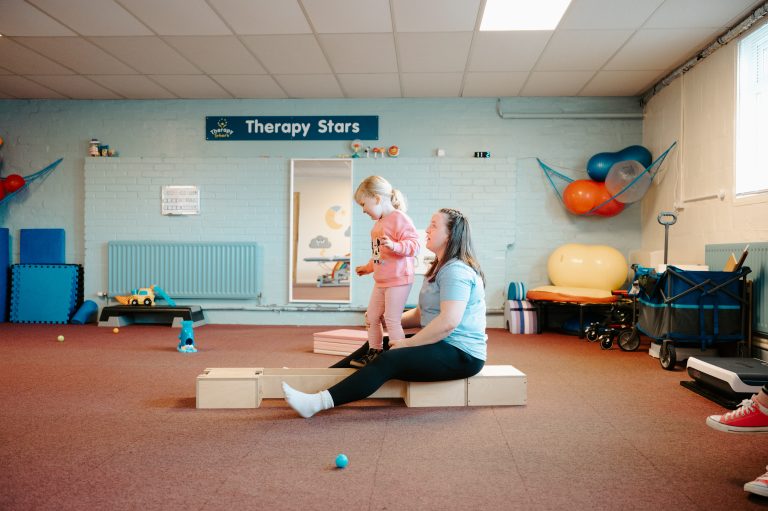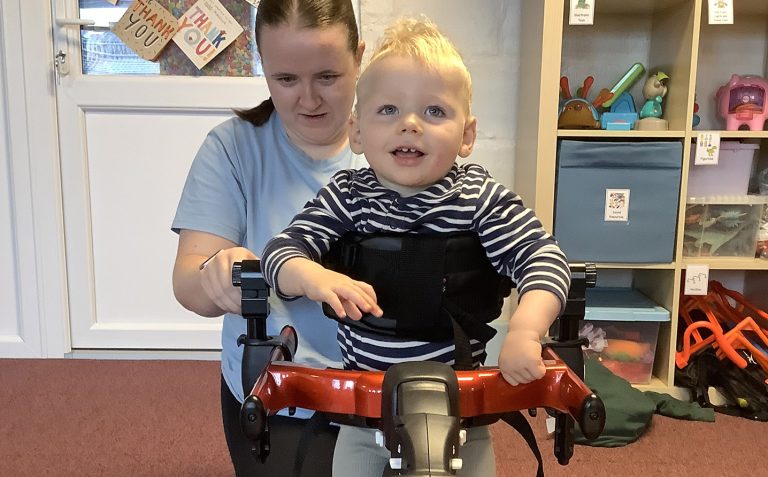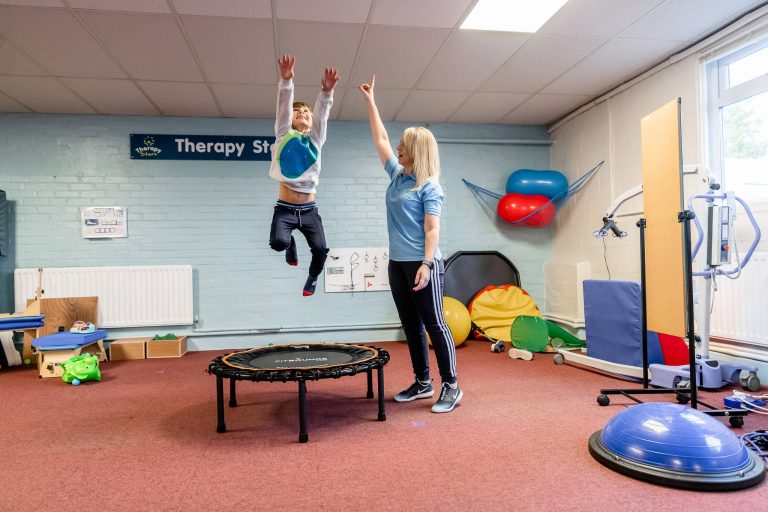
Walk past the clinic during a session and there’s a good chance you’ll hear plenty of laughter. You might also find the floor covered in toys, with a physio right in the middle of it all.
It can look a lot like playtime, but there’s a lot of thought behind what you’re seeing.
Play is a huge part of how we work with children at Therapy Stars. The activities we choose can give children a reason to make a particular movement or spend a little longer practising something they’re working towards, without the whole session feeling like a list of exercises.
There’s a plan behind the play
The work that goes into a physiotherapy session starts before your child walks through the door.
Our physios think about what they want to focus on and how they can make that engaging for the child they’re seeing. That can influence the equipment we get out, the way we position a child and even where we put their favourite toy.
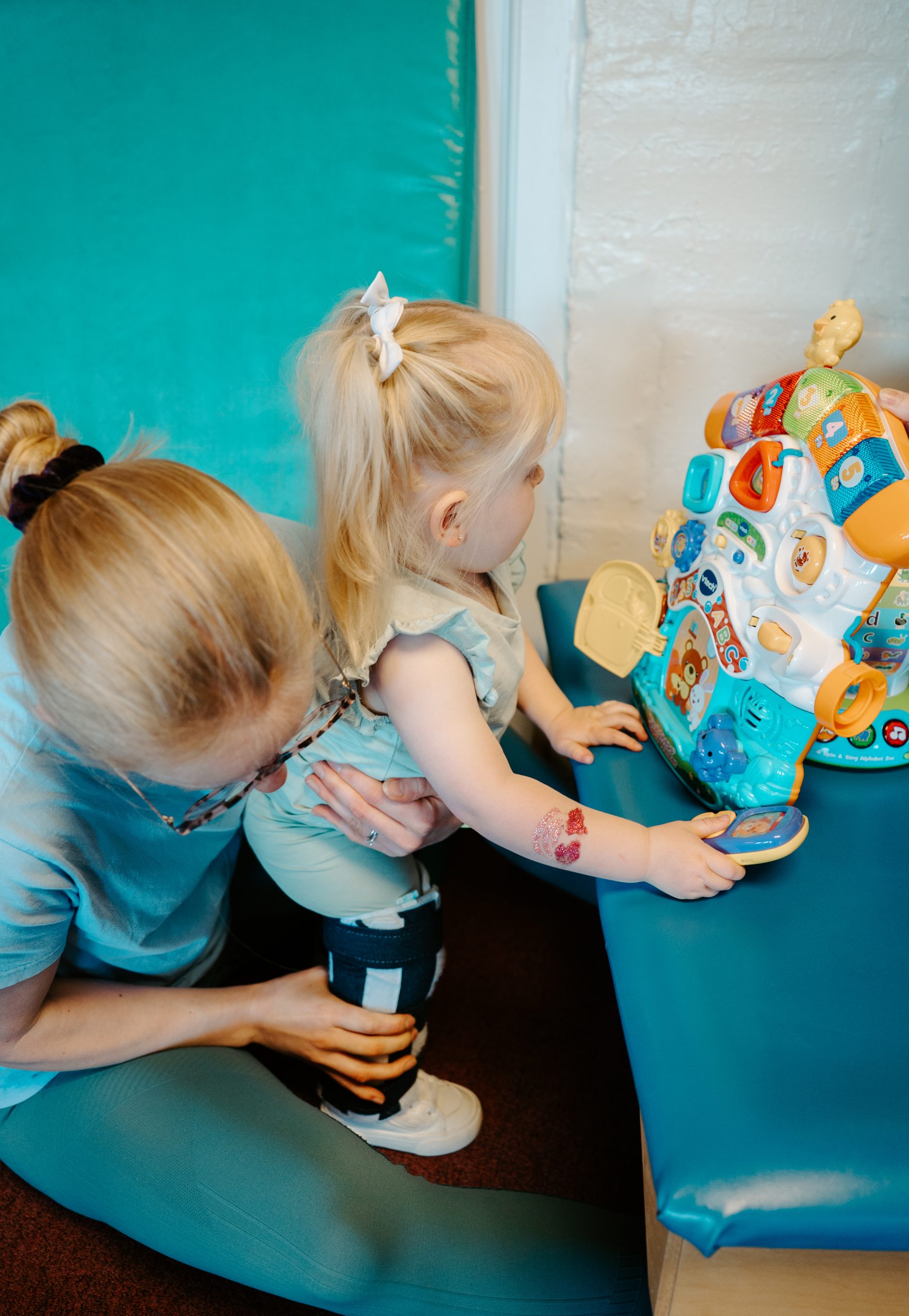
A child reaching for a toy, for example, might simply be determined to get hold of it. Their physio could be using its position to encourage a particular upper-limb movement or shift in position.
Those little details are deliberate, and they’re all linked back to what we’re working towards with that child.
Children don’t always follow the plan!
We can put plenty of thought into a session beforehand, but anyone who works with children will know that the plan can change pretty quickly once they arrive.
A child might be tired that day, or the activity we thought they’d love might be met with absolutely no interest whatsoever.
Our physios are used to adapting as they go. They can change an activity while keeping its purpose in mind, often using whatever has captured the child’s attention to find another way to work towards the same goal.
It’s one of the reasons getting to know the children we work with is so important. Knowing what makes them laugh or what they’re particularly interested in can be surprisingly useful when planning physiotherapy.
Why do we use play?
Children have a natural reason to move when there’s something they actually want to do.
Rather than asking a child to repeat a movement simply because we’ve asked them to, we can use play to give that movement a purpose. They might reach because there’s a toy they really want, or spend longer in a particular position because they’re absorbed in what they’re doing.
It gives our physios opportunities to work on physical skills in a way that feels engaging for the child.
Therapy at home doesn’t have to feel like homework
The same thinking can be useful at home.
We know families already have busy lives, and supporting your child’s physiotherapy shouldn’t mean trying to recreate a clinic session in your living room.
Your physiotherapist can show you ways to build opportunities for movement into things your child already enjoys. Sometimes a small change to the way an activity is set up can give them another opportunity to practise the skill they’re currently working on.
Speak to your physiotherapist about what’s appropriate for your child and how you can make it work at home.
A lot goes into those 55 minutes
The session you see in the clinic is only part of the work that goes into your child’s physiotherapy.
There’s planning beforehand, and throughout the appointment your physio is watching how your child responds and adjusting what they do accordingly.
So when you see a Therapy Stars treatment room covered in toys at the end of a session, there’s usually a reason for the chaos. Although we can’t promise all of it was strictly necessary. 😂💛
Would you like to find out more about physiotherapy at Therapy Stars? Get in touch with our team or book a complimentary phone call and we can talk about the support your child might need.