When families first explore physiotherapy, one of the most common questions is:
“What actually happens in a session?”
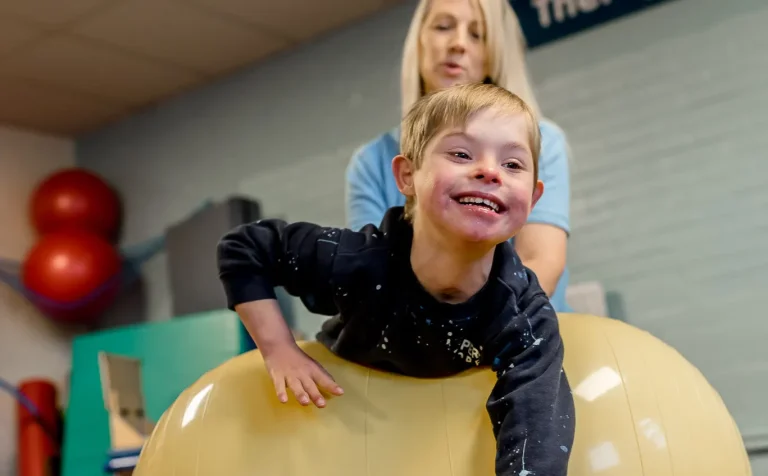
Children’s physiotherapy often looks different from what people expect. Our sessions are designed to feel engaging and child-centred, while still working towards meaningful physical goals.
Rather than focusing on repetitive exercises alone, physiotherapy sessions aim to help children practise movement skills in ways that feel achievable and motivating.
Therapy is tailored to each child
Every child who attends Therapy Stars has their own strengths, preferences and challenges.
Sessions are planned around:
- the child’s current movement abilities
- areas where support may be helpful
- activities that encourage engagement
- functional skills that support everyday life
Therapy may focus on skills such as sitting balance, transitions between positions, standing, or developing coordination.
Play is often part of the process
For younger children, play provides natural opportunities to practise movement. Play-based activities can help children develop:
- strength
- balance
- coordination
- body awareness
- confidence trying new movements
Therapy activities may be adapted so children can practise skills while interacting with toys, games or familiar routines.
Building skills step by step
Movement skills often develop through a series of smaller building blocks. Our therapists may break skills into manageable parts to help children practise:
- weight bearing through arms or legs
- reaching across the body
- controlling posture
- shifting balance between positions
- coordinating movement patterns
These smaller components help support more complex skills over time.
Different approaches may be used
Our physiotherapy programmes may include a range of therapeutic approaches depending on the child’s needs.
This may include:
- strengthening activities
- functional movement practice
- postural support
- Dynamic Movement Intervention (DMI)
- adapting the environment to support participation
Sessions are adjusted based on how the child responds.
Supporting progress between sessions
Therapy does not stop when the session ends.
Families will be given practical ideas to help children practise movement skills during everyday activities such as play, dressing or transitions between positions.
These small opportunities can help reinforce skills regularly.
Therapy looks different for every child
Some children attend regular physiotherapy sessions as part of ongoing support. Others attend intensive blocks when a more focused period of therapy is helpful.
Both approaches support meaningful progress at a pace that feels manageable for the child and family.
If you would like to explore how physiotherapy could support your child, we’re here to help. We offer therapy packages for ongoing support, as well as intensive programmes delivered over a focused period of time to help children work towards specific goals.
To find out more, please complete the contact form on our website and a member of our team will be in touch. https://therapystars.co.uk/contact-us/