
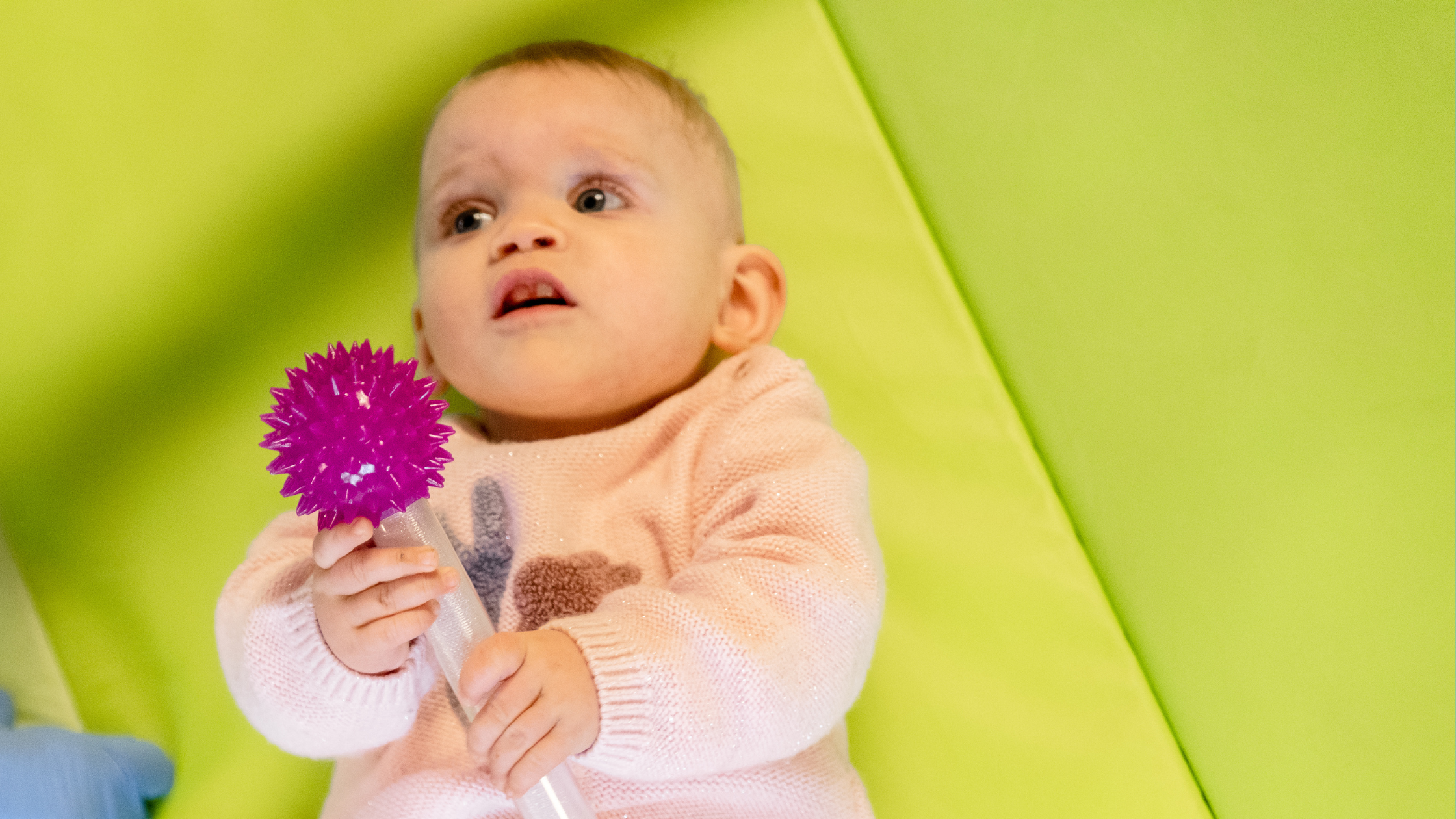
Play is one of the most powerful ways babies learn to move.
Through play, children explore their bodies, practise new movements, and gradually build strength, balance, and coordination. But just like every child develops differently, the way they play and move can look different too.
For some babies, movement comes easily. For others, including babies with developmental differences or physical challenges, play may need to be adapted to help them feel confident.
Movement through play
Babies and young children don’t think of movement as exercise. They experience it through play. When babies reach for toys, roll to explore their surroundings, or try to push themselves up, they are practising important motor skills.
Play-based movement helps develop:
- core strength
- balance and coordination
- body awareness
- problem-solving skills
These early foundations support later milestones like crawling, standing, and walking.
Every child’s movement journey is unique
Some children may take longer to develop certain skills, or may move in different ways. For example:
- a baby may prefer rolling rather than crawling
- a toddler may walk later but move confidently in other ways
- a child with low muscle tone may need more support for sitting or standing
What matters most is helping children feel supported and confident in how they move.
Adapting play to support development
Simple adjustments to play can make movement more accessible for many children.This might include:
- using supportive positioning to help babies feel stable
- placing toys at different heights or distances to encourage movement
- offering different surfaces or environments for exploration
- breaking movements into smaller steps
Adapting play allows children to practise movement in ways that feel achievable rather than frustrating.
Supporting neurodiverse children
Neurodiverse children may experience movement differently. For example, children with conditions such as autism, Down syndrome, or epilepsy may have differences in muscle tone, coordination, sensory processing, or motivation to move.
During Neurodiversity Celebration Week, we’re reminded that development does not follow one standard path. Supporting children in ways that recognise their individual needs can help them feel more comfortable exploring movement.
The importance of patience and encouragement
Children often develop confidence through repeated experiences of success.This means:
- celebrating small steps forward
- allowing time for practice
- adapting activities when something feels difficult
- avoiding pressure to move “faster” than a child is ready for
When to seek guidance
Parents often have a strong sense of when something feels different in their child’s development.
Seeking guidance doesn’t mean something is wrong, it can simply provide reassurance and practical ideas for supporting your child. Professionals can help:
- understand your child’s movement patterns
- suggest ways to adapt play and positioning
- identify whether further support may be helpful
How digital resources can help
For many families, our digital resources offer a flexible, low-pressure way to support early movement at home.
Our digital programmes are designed to:
- break skills down into clear, manageable steps
- explain why certain movements matter
- offer practical strategies that fit into daily routines
- help parents feel confident supporting development at their own pace
They can be particularly helpful for parents who want guidance but aren’t sure whether their child needs one-to-one support, or who are waiting for appointments and want to feel proactive in the meantime.
👉 You can find our digital resources on the website if you’d like to explore this further, or get in touch for a chat with our team.


