Supporting your child’s movement doesn’t require complicated equipment or long sessions. In fact, some of the most effective support comes from simple, regular play woven into everyday routines.
From birth to around two years, children build motor skills gradually, and often in ways that look different from one child to the next. Practical, play-based movement can support strength, coordination, and confidence at a pace that suits your child.
Why play is so important for movement
Play gives children the chance to explore movement in a way that feels safe, motivating, and meaningful. Through play, babies and toddlers:
- experiment with new positions
- practise weight bearing and balance
- develop coordination and body awareness
- build confidence through repetition
For some children, these experiences come easily. For others, they may need more time, encouragement, or adaptation, and play allows this to happen without pressure.
0–6 months: Creating comfortable foundations
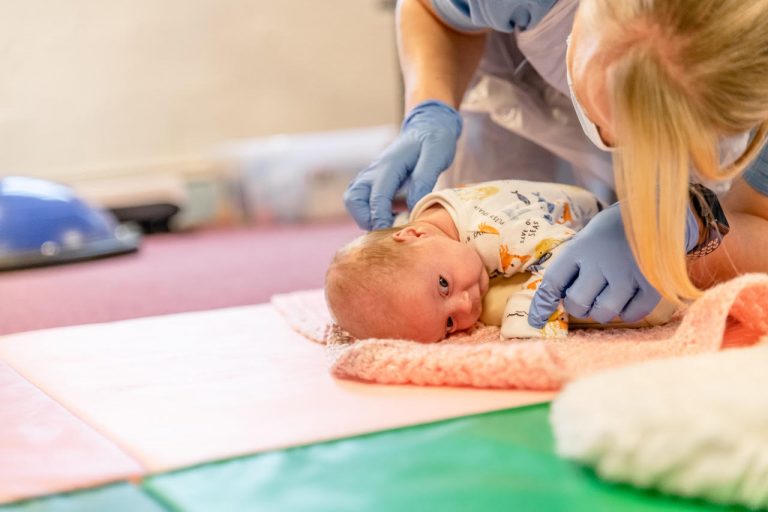
In the early months, movement support is less about “doing exercises” and more about helping babies feel comfortable in different positions. Supportive play during this stage might focus on:
- short, frequent periods on the floor
- helping babies experience a variety of positions
- encouraging gentle head and body movement
- allowing plenty of rest and breaks
At this stage, tolerance and comfort are just as important as activity.
6–12 months: Exploring movement in new ways
As babies grow stronger, they often start to explore rolling, sitting, and early attempts to move around their space. This stage looks very different from child to child. Play-based support can help by:
- offering opportunities to shift weight and change position
- encouraging reaching and rotation
- supporting balance and postural control
- allowing children to explore movement at their own pace
For children who find movement more challenging, these experiences may need to be broken down or adapted, and progress may be gradual.
12–24 months: Building confidence through repetition
In toddlerhood, skills are refined through repetition and familiarity. Walking, climbing, squatting, and moving in different environments all rely on earlier foundations. Practical play at this stage can support:
- confidence using existing skills
- balance and coordination
- strength through everyday movement
- problem-solving and planning
Some children may still prefer familiar ways of moving, and that’s okay. Confidence often develops alongside physical ability.
Supporting movement without pressure
For families whose children are developing more slowly or differently, play can be a way to support movement without constantly focusing on what’s “next”. Practical guidance can help parents:
- understand what their child is working on
- feel confident offering the right level of support
- avoid unnecessary comparison
- know when extra guidance might be helpful
At Therapy Stars, we believe movement support should fit into everyday life, not add pressure. If you have questions, our team is happy to talk things through and offer guidance. Sometimes a conversation is all that’s needed to help things feel clearer and more manageable.
👉 If you’d like to speak with a member of our team, you can get in touch via our contact us page or book a free introductory call.