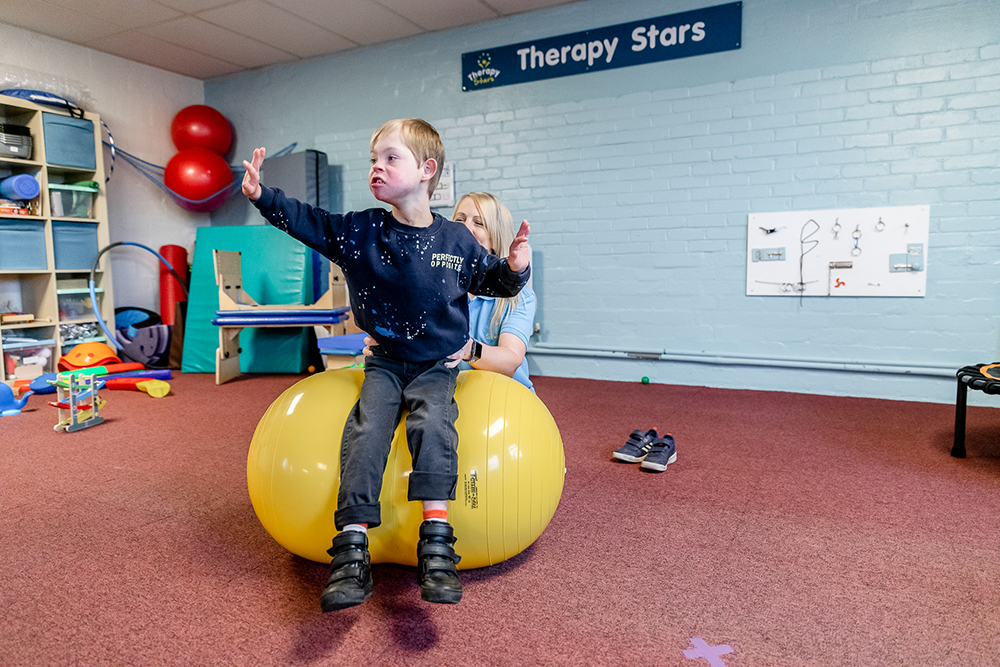
Movement and Mind: Why Physical Skills Matter for Your Toddler’s Confidence
If your toddler sometimes avoids climbing frames or wobbles on the steps at soft play, you are not alone. Many families we meet at Therapy Stars worry that their child’s…
Intensive physiotherapy requires an individual to go through a short but intense period of daily treatment. Typically, this would involve around two to three hours of physiotherapy per day, for…
In this article, our team of physiotherapists spotlight everything there is to know about the less-known form of therapy, lycra garments. If you’re new to the world of lycra garments,…
In this article, our team of physiotherapists explore everything there is to know about Kinesio-Taping, from its specific uses to its many benefits. If you’re new to the concept of…
If you’re new to the world of physiotherapy, you may be wondering what whole body vibration is and how it is used to help children with mobility issues. If so,…
Hand-eye coordination is the visual processing of information to guide hand movements. It is hugely important to a variety of daily routine activities such as writing and catching. Often, poor…
Dyspraxia is a neurodivergent condition that affects how the mind processes actions. It usually affects coordination, movement, balance, organisation abilities and is said to affect up to 10% of the…
If you have a child, there is a good chance you’ll have noticed them sitting with their legs in a W-shaped position. W-sitting is a very normal position for children…
Many children will show signs of developmental progress, but for some these milestones may come much later than others, meaning there is a gap between them and other children. Global…
Talipes, commonly known as ‘Club Foot’ or ‘TEV’, occurs in around 1 in 1000 children born in the U.K. It is a condition where the tendons in one or both…